One of the biggest misconceptions about investing is that success comes from picking the perfect stock.
In reality, long-term investors usually win because they built the right structure for their portfolio.
Think of your portfolio like building a house.
Stocks are the materials, but the portfolio structure is the blueprint. Without a solid blueprint, even great materials can create an unstable result.
Today we’re looking at three of the most common portfolio construction models investors use:
- The 60/40 Portfolio
- The Core & Satellite Portfolio
- The Thematic Portfolio
Each has strengths, weaknesses, and a different personality. The key is understanding which approach aligns with your risk tolerance, time horizon, and investing style.
1. The 60/40 Portfolio
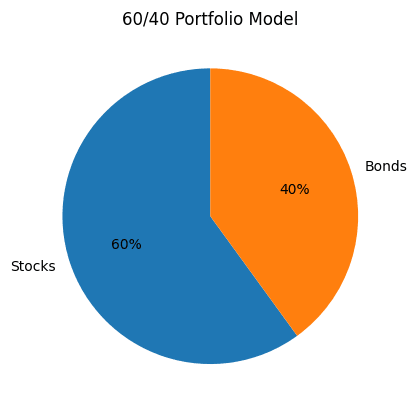
The 60/40 portfolio is one of the most traditional investment models used by financial advisors.
Structure
- 60% Stocks (growth)
- 40% Bonds (stability and income)
The goal is balance: stocks provide growth while bonds help reduce volatility.
✔ Strong diversification and stability
✔ Allows investors to pursue high-conviction ideas without risking the entire portfolio
✔ Flexible and adaptable to changing market conditions
✔ Encourages disciplined portfolio management
Cons
✖ Requires more research and monitoring
✖ Investors may over-allocate to speculative satellite ideas
✖ Can become messy without clear allocation rules
Best For
- Investors who want balance and flexibility
- People comfortable researching individual stocks
- Long-term investors building a diversified portfolioAt Trade Insights, this model tends to align well with our philosophy of building diversified portfolios while still making informed stock selections.
2. Core & Satellite Portfolio
The Core & Satellite model is one of the most popular approaches among modern long-term investors.
Instead of putting everything into one strategy, you divide your portfolio into:
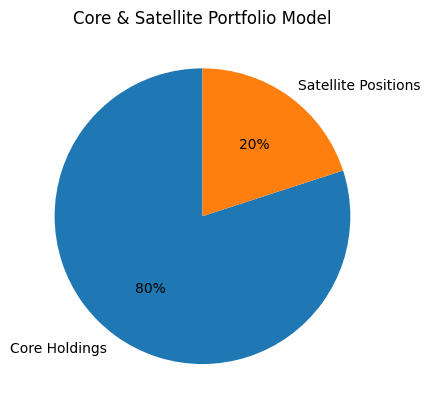
- Core holdings (the stable foundation)
- Satellite positions (higher-conviction opportunities)
Structure
- 70–90% Core
- 10–30% Satellite
The core keeps the portfolio stable, while the satellite section lets you pursue opportunities.
Pros
✔ Strong diversification and stability
✔ Allows investors to pursue high-conviction ideas without risking the entire portfolio
✔ Flexible and adaptable to changing market conditions
✔ Encourages disciplined portfolio management
Cons
✖ Requires more research and monitoring
✖ Investors may over-allocate to speculative satellite ideas
✖ Can become messy without clear allocation rules
Best For
- Investors who want balance and flexibility
- People comfortable researching individual stocks
- Long-term investors building a diversified portfolio
At Trade Insights, this model tends to align well with our philosophy of building diversified portfolios while still making informed stock selections.
3. Thematic Portfolio
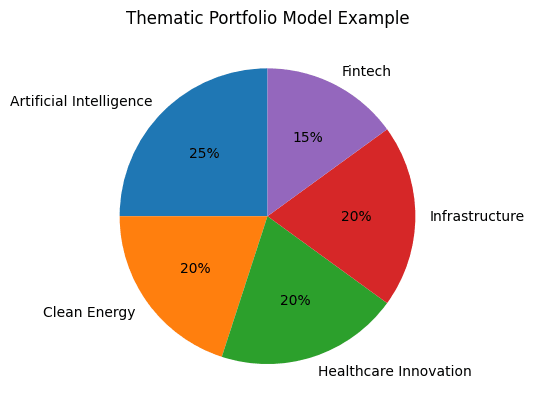
A thematic portfolio focuses on major long-term trends shaping the future of the economy. Instead of allocating by asset class, investors allocate by themes.
Common themes include:
- Artificial Intelligence
- Clean Energy
- Healthcare Innovation
- Infrastructure
- Demographics & Aging Population
This model tries to capture powerful structural trends rather than broad market exposure.
Pros
✔ Exposure to high-growth industries
✔ Aligns investing with long-term global trends
✔ Can outperform if themes develop as expected
Cons
✖ Often more volatile
✖ Concentration risk if themes underperform
✖ Can fall victim to hype cycles
Best For
- Investors comfortable with higher volatility
- Those who strongly believe in long-term megatrends
- A satellite strategy rather than a full portfolio
Choosing the Right Portfolio Structure
There’s no single “correct” portfolio model The best structure depends on:
- Time horizon
- Risk tolerance
- Investment knowledge
- Personal goals
- A younger investor with decades ahead may lean toward a Core & Satellite approach, while someone closer to retirement might prefer the stability of a 60/40 portfolio.
Many experienced investors even combine strategies.
Example:
Core & Satellite portfolio
- With a 60/40 style allocation inside the core
And thematic investments inside the satellite
The Trade Insights Perspective
At Trade Insights, we believe investing is not about chasing the hottest stock. It’s about building a durable portfolio designed to grow over time.
The goal is simple:
Invest with intention, diversify intelligently, and build a portfolio that can weather different market environments.
Because successful investing isn’t about speculation. It’s about construction. If you know someone who’s ready to move from curious to confident with investing, share Trade Insights with them.
Let’s build this community of smart investors together.
Want more? Subscribe for weekly picks.
